

Home › Forums › Sign Making Discussions › General Sign Topics › How to drill into a shop fascia?
-
How to drill into a shop fascia?
Posted by Phill Fenton on 28 December 2015 at 19:09Went to do an install today of a shop sign and had to give up as I was unable to drill into the fascia of the shop.
When I first surveyed the Job I had assumed the fascia was wooden – but it turns out to be a very tough hard tile like material which is proving extremely difficult to drill. I tried using metal drills and masonary drills – and an electrician who was also working at the shop tried to help me out using a diamond drill bit but even this took ages just to drill a single hole.After 19 years in the business – this is the first time I have had to admit defeat and beat a hasty retreat.
I decided to call it a day and seek the advice off UKSB.
Any sugestions? 😀
Robert Lambie replied 9 years, 12 months ago 9 Members · 20 Replies -
20 Replies
-

Come across this a few times over the years. Super hard ceramics and not much gets through it.
Normal masonry drills don’t work. Either blast through with a high impact SDS with a Hilti bit using more ‘battering through’ than grinding through or….buy a few Bosch Blue multi construction drills. Sharp tips to either grind/cut or hammer through…loads of pressure on the drill and go for it. Once the ceramic is ground away it’s simple enough. Run in non-hammer mode if you want to get started.Dave
It’s not granite or marble slabs is it? If it is use same Bosch drill bits and plenty pressure on the drill.
-

How about trying a glass TCT bit with maybe not too much pressure on the hammer until you see how it goes.
Neil
-
quote NeilRoss:How about trying a glass TCT bit with maybe not too much pressure on the hammer until you see how it goes.
Neil
If you use glass bits (very pointed tct) don’t use the hammer function as they chip/snap easily if they hit anything under the ceramic such as irregular stones….it’s a slow, slow grind using them.
-

Sounds like you are drilling into a sort of Granite, Phill.
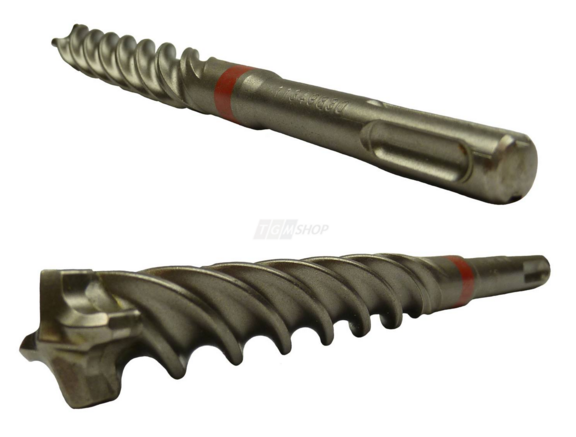
I have been there, same as you i used various bits we carry and it killed them all using both Dewalt and Bosch SDS Guns and Bits. I was there an hour and burt the heads clean off the bits.Just by chance, we took delivery of a new Hilti SDS Gun and Hilti hex head drill bits. (think thats the name)
I tried this and drilled 8 holes in a couple of minutes. Where as i was unsuccessful drilling a single hole with the various bits used above in over an hour.
I dont think you need to use a Hilti gun with their bits, typical SDS gun should work fine with Hilti bits. worth a go!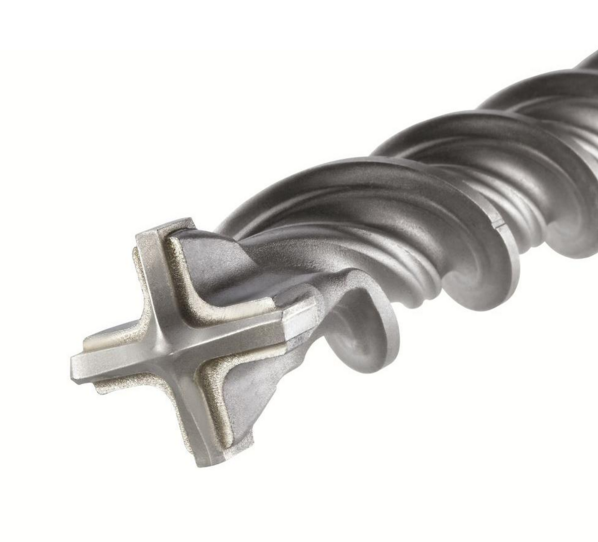
-

If it’s granite or marble then a decent diamond core bit bit should be able to cope, some require a water lubricant when used. Carbide tipped bits should also cope with either of them. Last time I did anything like that was years ago & I used either carbide tipped or cobalt bits.
Low speed & no hammer action tends to work best if I remember correctly, worth trying.
-
Not 100% but think it was carbide tips I used Martin with water lubricant also.
We initially thought it was marle so went prepared with an array of bits and things to try. It was the shop owner that said he thought it could be Granite, as i didn’t know the difference. 😕 :lol1:
I was just so amazed by how fast and neat the Hilti solution was. At the time we replaced everything we used to Hilti, knocks spots off every other tool we use. -

So it’s not just me then 😕
Thanks for all the suggestions. I have now bought a selection of drill bits to try – including Bosch Multi Construction bits, a ceramic bit, Dewalt extreme masonary bits, Hilti hex head drill bits and even a dry diamond tile drill bit. It’s cost me a fortune, but as the job is an hours drive away (so two hours there and back) I don’t fancy a second humiliating defeat.
I will report back later with a full product comparison test, and if I fail a second time will probably throw myself off a cliff or start selling stickers on ebay 😕
-

Phil
sometimes the drill you are using is just as important as the bits you are using, i’ve always used a Pneumatic rotary hammer SDS drill have had good make standard hammer drills that will not touch some materials but never had problem using the PRH. Similar to thishttp://www.kress-elektrik.com/Power-too … Uid%5D=686
Kev
-
There is one other type of fascia I’ve encountered that is hell to drill.
Cast iron.
Old fascias, especially curved fronts or those over the top of old pillar-fronted shops can be painted metal.
High quality HSS jobber drills from engineering suppliers (eg PRESTO)…takes an age to drill due to crystalline and grainy structure. -
quote Robert Lambie:Sounds like you are drilling into a sort of Granite, Phill.
I have been there, same as you i used various bits we carry and it killed them all using both Dewalt and Bosch SDS Guns and Bits. I was there an hour and burt the heads clean off the bits.Just by chance, we took delivery of a new Hilti SDS Gun and Hilti hex head drill bits. (think thats the name)
I tried this and drilled 8 holes in a couple of minutes. Where as i was unsuccessful drilling a single hole with the various bits used above in over an hour.
I dont think you need to use a Hilti gun with their bits, typical SDS gun should work fine with Hilti bits. worth a go!Can’t beat Hilti SDS masonry bits….
-
quote DavidRogers:There is one other type of fascia I’ve encountered that is hell to drill.
Cast iron.
Old fascias, especially curved fronts or those over the top of old pillar-fronted shops can be painted metal.
High quality HSS jobber drills from engineering suppliers (eg PRESTO)…takes an age to drill due to crystalline and grainy structure.Yup – I’ve come across those as well and at first thought this was metal too but it was definitely stone in this instance. Never the less, thanks for the heads up David
-
Phill if you try the Dewalt bits then don’t use the hammer action, carbide tends to be a little on the brittle side & a hammer action could just chip the carbide tips. Take a little bottle of water as well to use as lubrication. Oh & a video camera so you can do a full product review on each of the bits :lol1: :lol1:
If you fail second time round then just slap some vinyl up, probably stick ok if it’s a smooth granite or marble facia.
Think it was 90 holes I had to drill for the nightclub I did in Dunfermline which was the first time I had encountered something like that 😳 -

Whichever bit you use try reducing the speed which you drill it and as Martin has suggested use a coolant or lubricant to keep the bits cooler. Possibly also try using a smaller drill bit first to create a pilot hole. All a bit off a ball ache but all should help.
Cheers
Gary
-

Have you tried this Phill, Holes might be a bit bigger than you want, but works a treat.
Seriously thoughI had the same problem years ago on some old building it was a nightmare.. could be time to walk away …
Attachments:

-
quote Gary Birch:Whichever bit you use try reducing the speed which you drill it and as Martin has suggested use a coolant or lubricant to keep the bits cooler. Possibly also try using a smaller drill bit first to create a pilot hole. All a bit off a ball ache but all should help.
Cheers
Gary
from personal experience, it’s not necessarily recommended to reduce speeds or lubricate / cool the bits. Most off the shelf bits are dry bits relying on the medium you are cutting turning to dust and being ejected from the hole by the drill flutes. I’ve made the mistake of wetting what turned out to be dry cutting carbide (coring) bits…just lubricated it and stopped the cutting!
Diamond bits on the other hand very often recommend wet to wash out the grinding surface.
Unless you’ve got the potential for the surface to crack (tiles) then I wouldn’t say that going slow when cutting stone is better. A steady, firm pressure at the drill’s full speed normally gives the ideal tool surface speed to cut / grind / pulverise the media. Light pressure for extended time may just heat up the tip to the point the brazing can fail on carbide tipped bits. -
quote DavidRogers:quote Gary Birch:Whichever bit you use try reducing the speed which you drill it and as Martin has suggested use a coolant or lubricant to keep the bits cooler. Possibly also try using a smaller drill bit first to create a pilot hole. All a bit off a ball ache but all should help.
Cheers
Gary
from personal experience, it’s not necessarily recommended to reduce speeds or lubricate / cool the bits. Most off the shelf bits are dry bits relying on the medium you are cutting turning to dust and being ejected from the hole by the drill flutes. I’ve made the mistake of wetting what turned out to be dry cutting carbide (coring) bits…just lubricated it and stopped the cutting!
Diamond bits on the other hand very often recommend wet to wash out the grinding surface.
Unless you’ve got the potential for the surface to crack (tiles) then I wouldn’t say that going slow when cutting stone is better. A steady, firm pressure at the drill’s full speed normally gives the ideal tool surface speed to cut / grind / pulverise the media. Light pressure for extended time may just heat up the tip to the point the brazing can fail on carbide tipped bits.I’m not saying it would work for sure, I am saying it is worth a try. Higher rpm creates higher heat and will burn out drill bits. Different situation I know but when drilling stainless running at too high rpm will burn the bit out faster than reduced rpm. Pressure on the bit should be kept as consent as possible.
I appreciate what you are saying regarding a coolant but it may also assist in this situation by washing the particles away from the point of contact allowing for the heat to dissipate faster. After all I bet the manufacturer uses coolant when cutting it to size.
-

I spent 20 years as a full time Sign Engineer and have come across most surfaces. Some fascias need big 25mm holes for cable to go through when connecting up neon letters, not just fixings. A normal DIY hammer drill is not a Hammer drill, it is a percussion drill and works off a offset arm which simply makes the head vibrate and is useless in most situations.
A proper drill for masonry is a Hammer drill with SDS push in drill bits. These are what people call Hilti drills. Hilti is just a make and most of the other manufacturers make SDS type hammer drills. A proper Hammer drill like this uses a piston to bash the drill bit in and out and usually run quit slow. This is the only type of tool to properly drill concrete and stone.
I have drilled Granite, marble etc with a drill like this, But the bits that Rob used are probably the best thing. One of the best ones I had, and still have, is a Bosch re-chargable 18 volt drill that will fly through concrete Ten times faster than a mains powered DIY drill.
That said there are some materials now that really need a specialist drill company with diamond and water equipment.
It is sometimes safer to get someone like this as a hammer drill can be quit vicious sometimes and you don’t want to crack the fascia.
We did a job many years ago when a specialist company was called in to drill large holes for cables. The fascia which was marble from somewhere exotic was laid on the ground onto sand and we stuck a template on for the specialist to drill 25mm holes for old lead neon cable.
This was done in a very short time with the right equipment but the shop fitters had laid the panels on the floor and told us that the top was the bottom so the lot was drilled upside down. Not our fault but theirs. Consequently the whole fascia had to be replaced at a cost of around £10,000 and this was about 25 years ago. So be very careful !!! -
Finally completed this job this morning. I had fitted backets to the bottom of the frame to allow me to attach the lower section into a wooden part of the fascia (this was part of my back up plan) – Fortunately it was not really needed as I was more successful this time at drilling the masonry.
The Hilti Bits worked quite well even with a normal percussion drill – but even more successful was Dewalt extreme masonry bits. Don’t get me wrong – it was still hard work but these bits eventually drilled through and were marginally better than Hilti (though I have no doubt these would have been much more effective with a proper hammer drill). I never bothered with the tile cutting bit as I had already concluded that the material was granite rather than marble.
Here’s a picture of the finished install.
Attachments:


-
Phil
Glad you got it sorted out, invest in a decent Pneumatic rotary hammer SDS drill it will make light work of drillingKev
-
Thanks for completing the thread with the update Phill, makes all the difference to the value of the post to others reading.
Good to see the sign up in place too, looks good!

Log in to reply.