

Home › Forums › Sign Making Discussions › General Sign Topics › how do i go about forming aluminium?
-
how do i go about forming aluminium?
Posted by Brad Mulock on 18 August 2008 at 06:28Hi all,
I’m looking for some advice with a project i have recently been asked to undertake.
A client would like to "wrap" a column with a white sign. The column is approximately 7m tall and has a circumference of 1610mm
They would like the white background to be aluminum with vinyl lettering reading vertically down the column.
I am aware that to roll the aluminum to shape you need a big set of heavy rollers. I have spoken to our usual stainless steel fabricators who can roll aluminum but they can only go up to 700mm sections.
Has anyone else done anything like this before and if so, how?
Thanks
Brad
Ian Johnston replied 17 years, 4 months ago 4 Members · 11 Replies -
11 Replies
-

Are you actually having to create an exterior tube, or are you just cladding and existing column?
If its the second, could you not use a thinner material and bend/fix on site?
-

Hello Graeme,
I have thought about this myself. We are cladding the existing column so using a thinner material and bending on site is my preferred option but my partner have raised concerns. He thinks that we will encounter problems bending the material around the column uniformly and that fixing might be an issue.
I’ve not attempted anything like this before so have no experience to call on. What material would you use / suggest?
Brad
-
I have never done anything similar, but from an engineering background as long as the surface you are bending the sheets round are smooth then I cant see a problem in doing it. The hardest part is bending the final piece of the sheet towards the vertical joining edge.
At the end of the day it will come down to what the customer is willing to pay for. Custom fabrication at an engineering facility with the capability of forming the larger sheets into the desired circumference will cost.
I may get shot for this, but off the top of my head, 1mm Al or 2mm composite should do the trick. The end result will depend on how ‘tidy’ the join needs to be. Manually bend the sheet the best you can, helps if you can anchor one end with a temp batten (not sure how much drilling you can do to the pole).
The method Ive used in the past for bending bar (wrought iron work)is to bend a portion of each end first round a mandrel (the large post in your case), then form the remainder of the sheet. Either cut to size before bending, or bend, mark then cut!!!
Fixing??? mechanical fastners or glue?
If nothing else I hope its food for thought
-
Hello Graeme,
sounds like a plan to me. I’ll get a sheet of 1mm ali in and try bending around something similar to the column.
We can either flood coat the sheet in white vinyl or get it sprayed.
The customer is quite a large corporate and is willing to pay, our main problem is time. they would like to have the sing in place for the end of this month.
currently the column is clad in steel. I was thinking of fixing the back (first) edge in place with some large washers and self tapping screws which will be removed at the end and replaced with rivits and covered over in white vinyl.
I’ll reduce the size down to 6m and do it in three 2m sections which should be a little easier to handle.
Thanks for the advice. I’ll post the result online when the job’s up.
-
Drill and fix a 2.2m x 50mm batten to the post and use this as an anchor point and bend all 3 sheets (unless the column tapers!). Get your hands on some polly banding tape and a tensioning tool (or ratchet load straps)and use this to hold the fitted panels in place as the adhesive sets or as you drill and insert rivets (or both).
-

I think you will have a problem getting a consistent radius on all the pieces you wil need, to cover the height and circumference.
you may need to make a sturdy clamp (a couple of pieces of angle) to hold the edge you are bending. so it "rolls" at the same rate over the width.
Alternatively, (have never tried this but it may work) use some heavy duty Ratchet straps, at least two, and a few pieces of pipe to allow the webbing strap to move freely, make an improvised bending tool, to wrap around the existing column.I would be really looking for a local firm with a larger roller though, as this will do the best job,
Edit(didnt see Graeme’s post, Rachet straps are very versatile)Peter
-
you’ve been a big help. Thanks.
Do you think glue would be better than 1 or 2mm foam vhb tape?
-
On something like this I would opt for both mechanical (rivets, screws etc)and adhesive. You’re not going to get an exact wrap and there will still be a tendency for the material to spring open. Use the adhesive for load bearing (greater surface area) and the mechanical fasteners to initially secure.
-

we are doing similar at the moment, my usual guy i use for rolling has decided he only does his own stuff now so had to come up with a different idea.
it worked a treat,
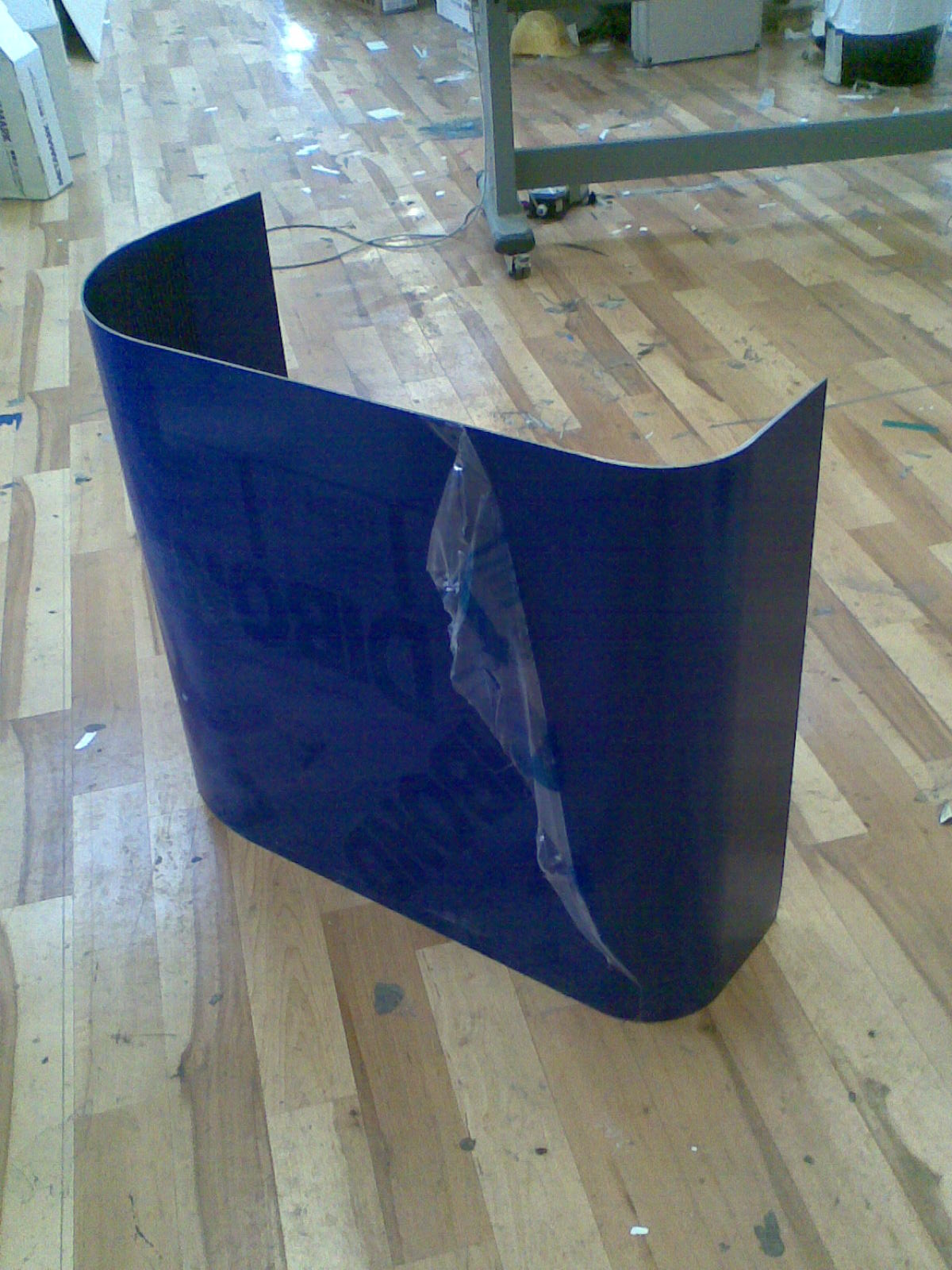
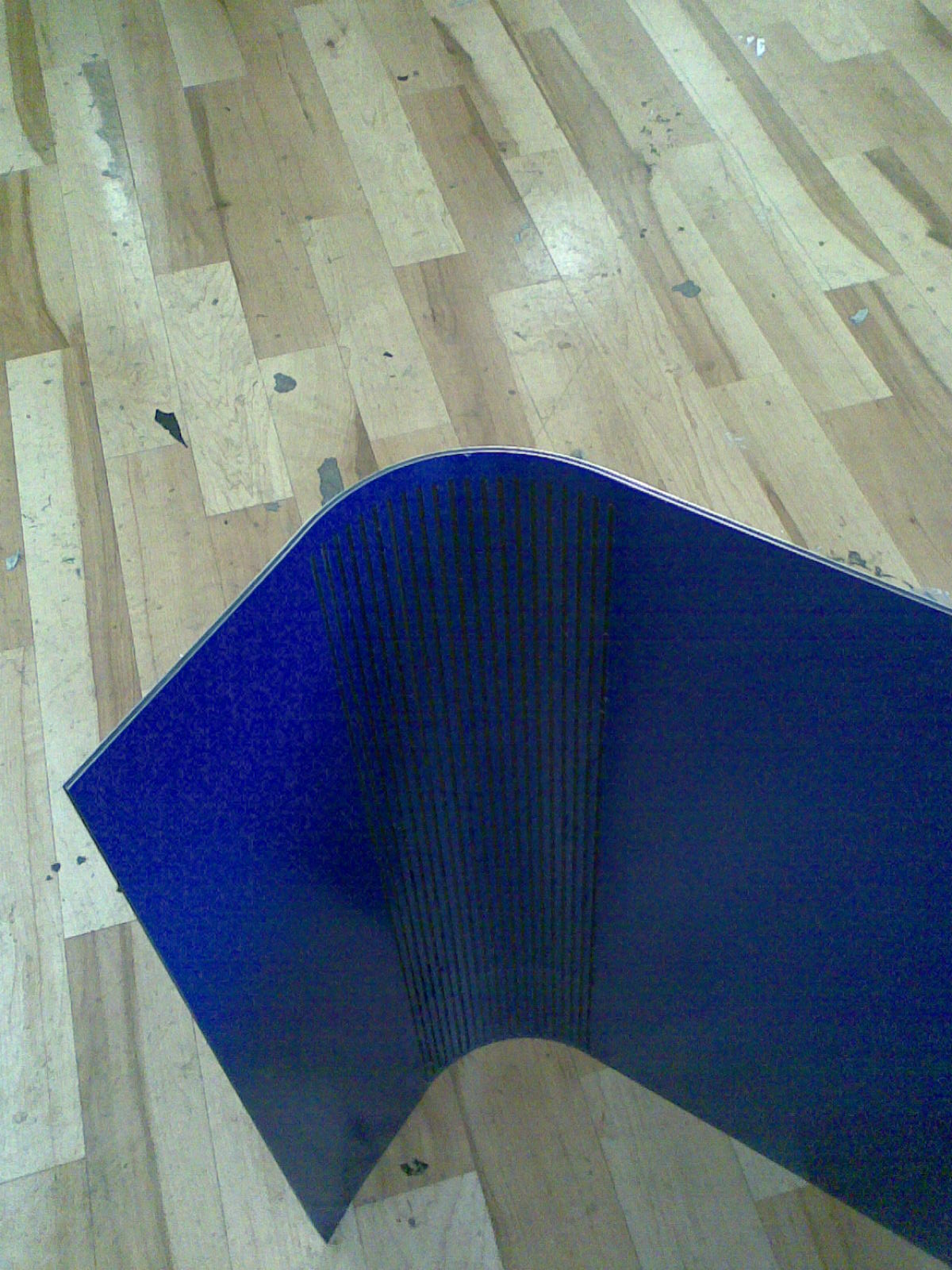
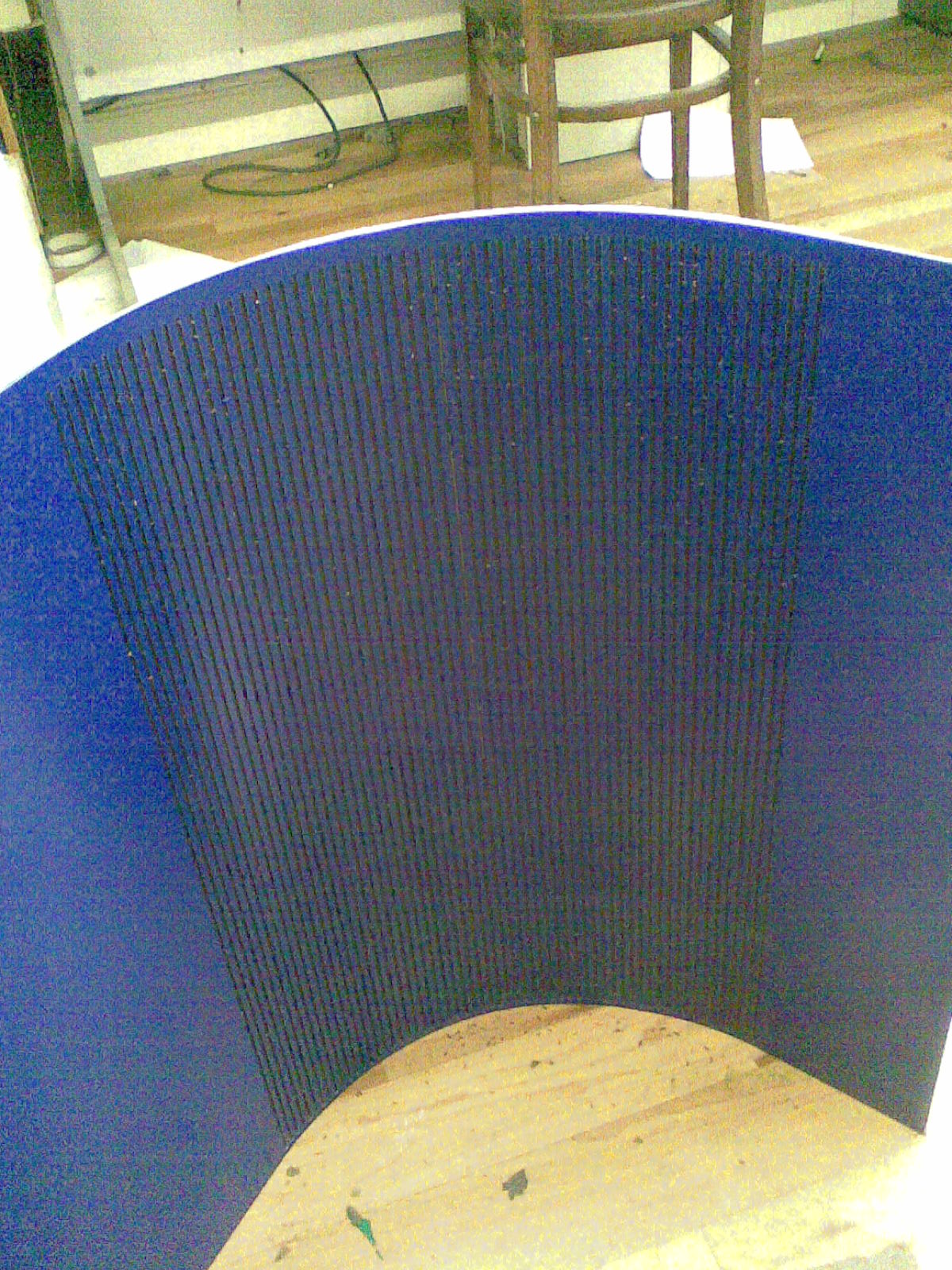
get someone with a cnc to router out a stripe pattern with a 3mm bit on the back of 3mm dibond, with gaps of 5mm between the router tracks, taking only the aluminum and 0.5 mm of the core on the router pass, doing a test we found if you leave a small bit unroutered it holds it shape perfectly.
i was able to easily form a 89mm radius and a 300mm radius by hand on the sheet and it held it’s curve no problem.Ian
Attachments:
-
Good Idea Ian,
uses the same principal for plastic so it may explain how it works,
or even provide a solution, if ally is not an essential material,you description just reminded me of a product I saw ant sign uk
Peter -
i used the principle of bendy MDF, decided to see if it would work on dibond and was mightily impressed with how it worked.
the pillar we are doing is 4meters high by 2.2m. not finished yet but will post the pictures.
I have done the force method before of bending it around a shape but unless you have a fold at the finishing and starting edges it is inclined to pull a lot on the fixings and bow out under pressure. this way you can rely entirely on glue fixing .Ian

Log in to reply.